What Is a Point Spread? How Handicap Lines Work
The point spread turns a lopsided game into a closer question by handicapping the favorite. Here is how to read the numbers and what the price beside them costs.
- Posted
- Reading time
- 4 min
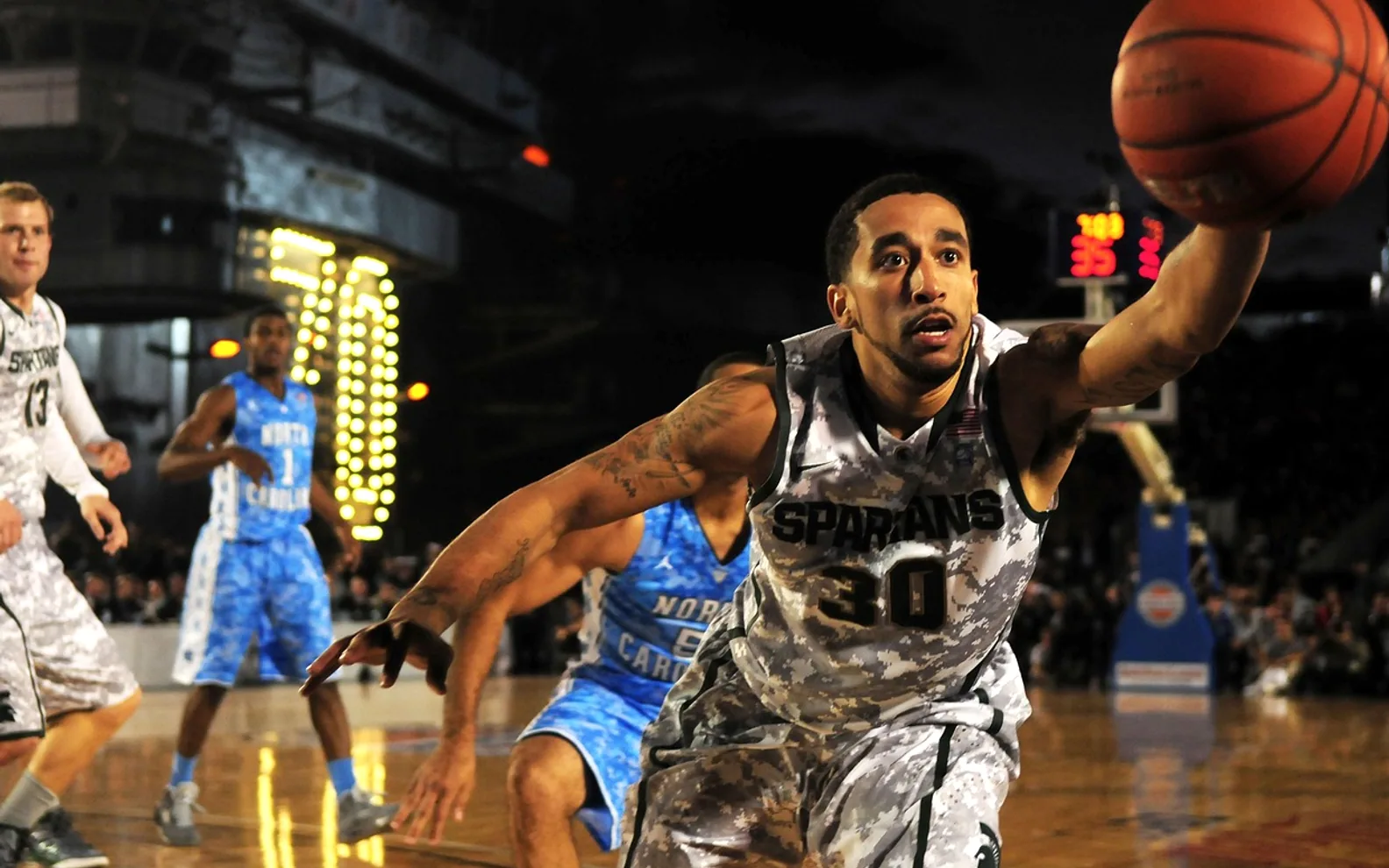
Ask a newcomer which team will win a basketball game and they will usually be right more often than not, because one side is often clearly stronger. Sportsbooks know this too, so they rarely leave the question that simple. The point spread is their answer: a handicap that subtracts points from the favorite and adds them to the underdog, so that the bet becomes a question about the margin rather than the winner.
Spreads are the standard market in American football and basketball. Hockey has a version called the puck line, baseball has the run line, and soccer uses handicaps that follow the same logic.
Reading a spread line
A spread appears as two numbers with opposite signs. Here is an invented game with invented teams:
| Team | Spread | Price |
|---|---|---|
| Millbrook Herons | −4.5 | −108 |
| Saltmarsh Comets | +4.5 | −112 |
The minus sign shows the favorite. Herons backers start the game four and a half points down on paper, so their bet only wins if the Herons win by five or more. The plus sign shows the underdog. Comets backers start four and a half points up, so their bet wins if the Comets win outright or lose by four or fewer.
Two finishing scores make it concrete:
- Herons 101, Comets 95. The Herons win by six, which is more than 4.5. Herons spread bets win.
- Herons 99, Comets 96. The Herons still win the game, but only by three. With the handicap applied, the Comets "win" the bet.
The line and the price are two different things
The number 4.5 is the line. The figures −108 and −112 are the prices, written in American odds. A price of −108 means risking $108 to make $100 profit; −112 means risking $112 for the same profit. Any stake works, since the figures only describe a ratio. Beginners often read the price as part of the handicap, which leads to some confusing betting slips.
The price tells you something else as well: what the sportsbook charges for the bet.
Where the margin hides
Turn each price into the probability it implies. With a minus price, take the number and divide it by that same number plus 100.
- Herons at −108: 108 ÷ 208 ≈ 51.9%
- Comets at −112: 112 ÷ 212 ≈ 52.8%
Added together, the two sides come to roughly 104.8%. A fair market on two outcomes would total exactly 100%, so the extra few percent is the bookmaker's margin, also called the vig or juice. It means a bettor needs to be right noticeably more than half the time just to break even, and that is before any bad luck. A spread does not make a game fair in money terms; it only makes the sporting question closer.
Half points, whole numbers and pushes
Lines that end in .5 exist for a reason: no team can win by half a point, so one side must win the bet. When the line is a whole number, a tie on the spread becomes possible.
Say the line were Herons −4 and the final score Herons 98, Comets 94. The margin is exactly four, so the bet is a push. Most sportsbooks return the stake on a push, though the house rules decide the details, especially when the bet is part of a combination ticket.
Why some numbers matter more
In American football, many games end with a margin of three or seven points because of how scoring works. Moving a line from −2.5 to −3.5 therefore changes the outcome far more often than moving it from −9.5 to −10.5. Some books charge a different price for crossing these key numbers, which is another way the cost of a bet can shift without the headline line changing much.
Why spreads move during the week
An opening line is the book's first estimate. It can move for several reasons:
- News, such as an injured starter or a change in the weather forecast.
- Money, when far more is staked on one side and the book wants to balance its exposure.
- Correction, as more information settles what the market thinks the gap really is.
Your bet keeps the line you took. If you backed the Herons at −4.5 and the line later moves to −6, your ticket still only needs a five-point win. Watching scores and line moves in real time can tempt people into extra bets they had not planned; our piece on mistakes people make with live scores covers that trap.
Spreads next to other markets
A moneyline simply asks who wins, so favorites pay little and underdogs pay more; the labels themselves are unpacked in favorite vs underdog in betting. A spread asks who covers the handicap, and both sides are usually priced close to each other. Totals ask a third question, about the combined score, and work in a similar way.
None of these markets is easier to beat than the others. Each carries its own margin, and each is decided by a game that can turn on a single play.
Keeping it in proportion
Understanding a spread is useful even if you never place a bet, because it shows how far apart the market thinks the two teams are. If you do bet, you need to be of legal age (18 or 21, according to local law), and sports betting is not permitted everywhere, so check the rules where you live first. Decide your stake for the week before you look at any line, treat that money as spent on entertainment, and stop once it is gone rather than chasing it back.
Latest by topic
Ground rules
Statements that hold on any platform
General points we lean on in nearly every article, whatever the game or market.
Every commercial game and betting market is priced to leave the operator in profit across many rounds.
A spin, a card or a match result has no memory of what came before it.
Promotional money almost always comes with conditions attached to withdrawal.
The legal age and the legal status of gambling depend on where you are standing when you play.
Fast games and in-play markets apply their cost more often per hour than slower ones.
Free, confidential support for gambling problems is available in most countries.
Keep reading
- Guides
What Is a First-Half Bet? Halves, Quarters and Periods
Part-game markets cut a match into halves, quarters, periods or innings and settle each piece on its own. How they are priced, how they settle and where they catch people out.
3 min
- Sports betting
Alternate Spreads and Buying Points: Moving the Line at a Price
Every extra point you take with an alternate spread is paid for in the price. How alternate lines and bought points work, with a ladder converted into implied probabilities.
4 min
- Guides
What Is an If Bet? Linked Wagers and the Action Reverse
An if bet chains straight bets so the next one only goes ahead after a win. Outcome tables for if bets, separate singles and the action reverse, with the costs worked out.
4 min